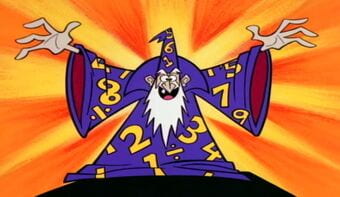
This fortnight we are learning to
determine the most important
details and events in the texts that we read.
DETERMINING IMPORTANCE is also referred to as FINDING THE MAIN IDEA.

Click here to practice this skill!
Still have time? Here’s something that explains it – especially for Factual Texts.
Thanks Tim and Moby!
You may have time to do the quiz and activities too.
No Comments »
For our Year 5 friends, NAPLAN is happening next week. For our Year 6 friends, you have one more year before your next test.
One of the tests that is part of NAPLAN is the Language Conventions Text. This covers spelling, grammar and punctuation.
For 5/6J members, your READING GROUP set tasks this week are to complete some Language Conventions practise questions from the studyladder website.
For home use, you can do more practise at the official NAPLAN website, or the Smeebu site too.
There are 7 practise tests assigned to you over at the studyladder website.
See Miss B if you have forgotten your username or password.
No Comments »
For our last artwork in Term One, we created these ghost gum artworks using chalk pastels. Miss B (who loves using these for her artworks) showed us the different ways to smudge and blend the chalk pastels.
They look great!
No Comments »
We raised money for Stewart House by wearing mufti and crazy hair and by bringing in a gold coin donation. It was the same day as the Easter Hat Parade for K-2 so there was some crazy, Easter-themed hair!
1 Comment »
Posted by missbeavis in Uncategorized, tags: arguments, ballet, canteens, dictionary, energy drink, football, key words, new words, persuasive writing, vocabulary
Last week you wrote a comment arguing about these topics:
Ballet is better than Football
School Canteens Should Be Open After School
Energy Drinks Should Be Banned
This week you are going to BUILD YOUR KEY VOCABULARY on one of those topics.
In your reading journal, write your topic as the heading. Underneath that you are going to have two columns,
Column A: List the key words and phrases that you read today on your topic.
Column B: List any new vocabulary that you learn today and find the meaning in a dictionary
When you click the link you will see there are 3 websites for each topic. Start with one and see how many you get through.
Here’s the link to the links!
No Comments »
Last week we tested a range of solids.
We tested the following properties:
Elasticity: Can the solid be stretched?
Malleability: Can the solid be manipulated into different shapes?
Brittleness: Is the solid hard, but will break or crumble easily?
Hardness: Can you scratch the surface of the solid?
We also tested the strength of the solid.Tensile strength means the
solid can withstand being pulled from end to end and Compressive
strength means the solid can withstand being squashed.
The solids we tested were a bar of soap, steel wool, corn flour, playdough, chalk, elastic bands and marbles.
No Comments »
This week we are looking at how authors make their writing more persuasive and more convincing. Some ways they do this is to include:
MODALITY – strong modal words and verbs like should, must, definitely etc
FACT DISTORTION - using a mixture of true facts and facts that have been invented or exaggerated.
RHETORICAL QUESTIONS – asking the reader questions that don’t need to be answered.
EMOTIVE LANGUAGE – using words that stir the reader’s emotions, like ‘harrowing near death experience’ rather than just ‘an accident’.
Your task today is to write a persuasive writing text as a comment to this blog post. Try to include some of the strategies above. Choose from one of the following topics:
School Canteens Should be Open After School
All Students Must Tie Up Long Hair
Ballet is better than Football
Energy Drinks Should Be Banned
I look forward to reading your arguments!
12 Comments »
Learning Intention: We are learning to Make Inferences so we figure out exactly what the author is trying to say.
Today you need to log in to the student’s area of this site. The password is on the board.

You need to drag the magnifying glass into the book. Complete the following 3 tasks:
A) Listen to the introduction
B) Watch the video
C) Complete the activity
If you finish early, drag the question mark into the book and complete the activities on Questioning!
2 Comments »
Last week we did an experiment to test the viscosity of different liquids.
We tested water, detergent and shampoo. Check out what happened!
CONCLUSION: The water was the least viscous as it flowed extremely fast. The detergent was more viscous than water; it flowed slowly. The liquid with the most viscosity was the shampoo as it resisted flow for a while, taking a long time to reach the ground.
No Comments »
This week our focus strategy is on MAKING INFERENCES.
Firstly, CLICK HERE to read what making inferences means and test out your skills. Read the story about Pete and Patti and then click the flower (you’ll know what I mean when you visit this site).
Next, you need to visit THIS SITE to play an inference game. How many clues did you need before you could guess? The lesser then better!
Still have time? Master the skill at these extra sites.
Wow, still have time? Log in and write a comment and tell us:
Why does making inferences help when reading?
What do you need to do to make an inference?
4 Comments »
|